You have tried the SPF 50. The vitamin C serum. The azelaic acid cream your dermatologist prescribed. Maybe even a chemical peel. The dark patches lightened — briefly — and then returned, often darker than before, particularly after a sunny day or a stressful week or simply as the next hormonal cycle arrived. Melasma is one of the most frustrating skin conditions a woman can face — not because it is dangerous, but because it is persistent, deeply personal, and almost universally undertreated at its actual root. Those brown patches on your cheeks, forehead, and upper lip are not simply sun damage. They are the visible consequence of excess melanin production driven by hormonal signals, genetic predisposition, and an internal environment that no topical cream can reach. Homeopathic medicine for melasma addresses that internal environment — working with the hormonal and constitutional picture to reduce pigmentation from within, rather than bleaching the surface while the root cause continues untouched.
What Is Melasma — and Why Does the Skin Produce It?
Melasma is a chronic skin condition characterised by symmetrical brown or dark brown patches appearing on sun-exposed areas of the face — most commonly the cheeks, forehead, nose bridge, upper lip, and chin. It develops when melanocytes — the skin cells responsible for producing melanin, the pigment that gives skin its colour — become overactivated and produce excess melanin in specific areas.
The defining feature of melasma that distinguishes it from ordinary sun damage is its symmetry and its hormonal connection. Melasma patches appear on both sides of the face in mirror-image patterns — both cheeks, both sides of the forehead, the upper lip as a broad, even band. This bilateral, symmetrical presentation is the hallmark of hormonally driven pigmentation rather than random sun-induced damage.
Why Does Melasma Develop?
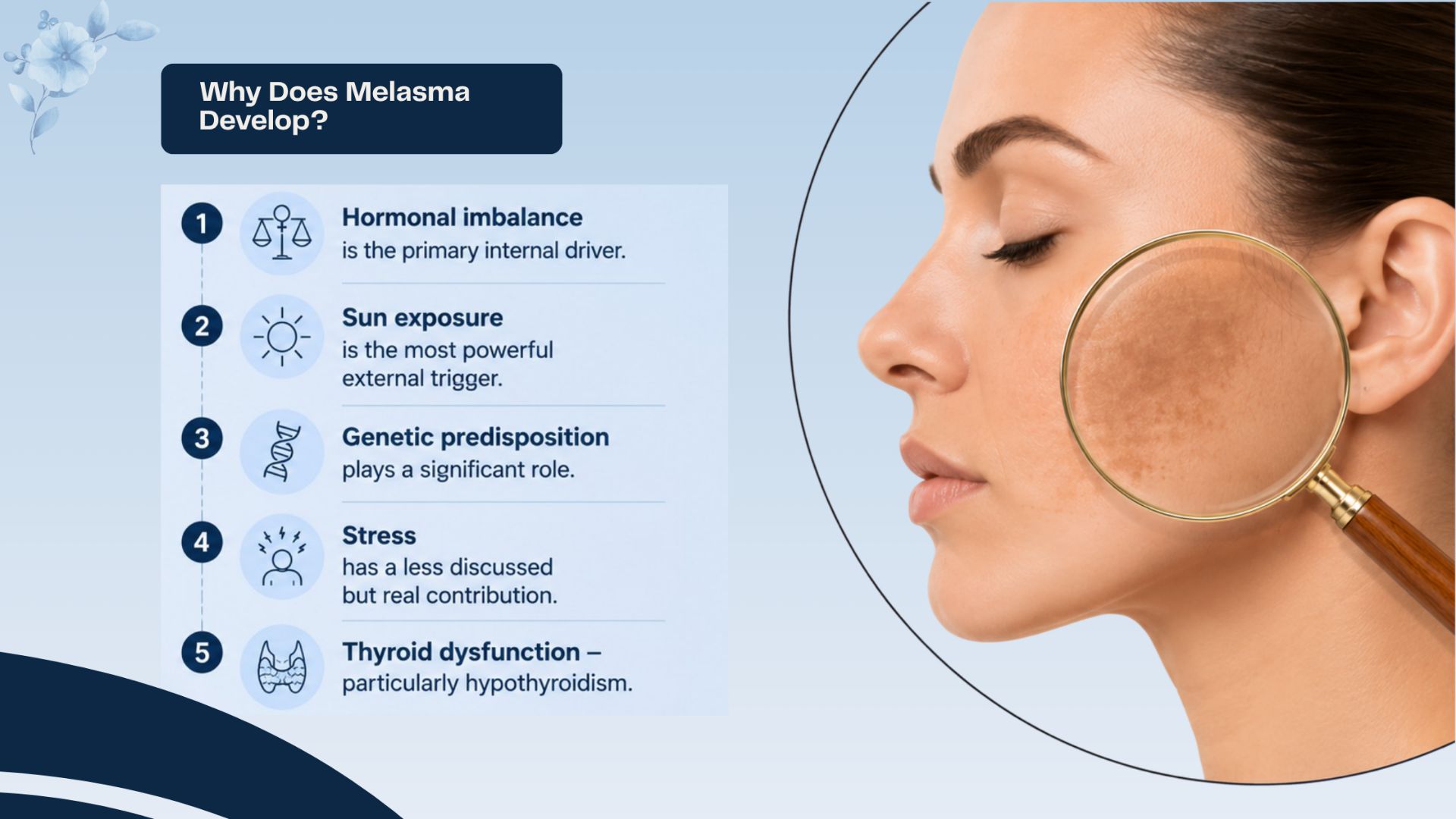
Hormonal imbalance is the primary internal driver. Oestrogen and progesterone both stimulate melanocyte activity — which is why melasma so consistently appears or worsens during pregnancy (where it is sometimes called the "mask of pregnancy"), after beginning oral contraceptive use, during perimenopause, or during hormone replacement therapy. The hormonal fluctuation directly instructs melanocytes to produce more melanin.
Sun exposure is the most powerful external trigger. Ultraviolet radiation from the sun activates melanocytes directly — which is why melasma worsens in summer, improves partially in winter, and returns rapidly after sun exposure even when it seemed to be fading. Sun protection is essential but insufficient on its own because it addresses only the external trigger while the internal hormonal driver continues.
Genetic predisposition plays a significant role — melasma runs in families, is more common in women with darker skin tones (Fitzpatrick skin types III to V), and reflects a constitutional tendency of the melanocytes to be hypersensitive to hormonal and UV stimulation. A family history of melasma significantly increases likelihood of developing it, and explains why some women develop significant melasma from minimal sun exposure while others with similar hormonal profiles and sun exposure do not.
Stress has a less discussed but real contribution — cortisol, the primary stress hormone, influences melanocyte-stimulating hormone (MSH) activity, and many women notice their melasma worsening during periods of sustained psychological stress. The physical and mental burden of stress on the hormonal system is directly reflected in the skin.
Thyroid dysfunction — particularly hypothyroidism — is associated with melasma, and women with stubborn melasma unresponsive to conventional treatment should consider thyroid assessment as part of their investigation.
What Melasma Actually Looks Like — and Why It Matters Where It Appears
Melasma patches are typically:
Brown to dark brown — ranging from light tan to deep brown depending on skin tone and depth of melanin deposition. In darker skin types, melasma can appear almost grey-brown.
Symmetrical — appearing on both sides of the face in matching patterns. This symmetry is the clearest distinguishing feature from other pigmentation disorders.
Located on sun-exposed areas — cheeks, forehead, nose bridge, upper lip, and chin are the most common sites. The upper lip melasma — a dark band across the entire upper lip — is particularly distressing for many women and among the most difficult locations to treat topically.
Variable in intensity — most women notice their melasma darkening in summer with sun exposure and lightening slightly in winter. Hormonal events — pregnancy, starting or stopping the pill — can produce dramatic changes in intensity within weeks.
Affecting quality of life significantly — research consistently shows that melasma has a meaningful psychological impact, affecting confidence, social interactions, and overall wellbeing in ways that the "it's just pigmentation" framing completely fails to acknowledge.
Why Conventional Treatments Keep Failing — The Cream-and-Peel Cycle
The standard dermatological approach to melasma involves topical depigmenting agents — hydroquinone (the most commonly prescribed), azelaic acid, kojic acid, retinoids, and combination creams — alongside chemical peels, laser treatments, and strict sun avoidance.
These approaches lighten the surface pigmentation. They work — partially, temporarily — by interfering with the melanin production process at the skin cell level. But they do not address the hormonal and constitutional drivers that are instructing the melanocytes to overproduce melanin in the first place.
The result is the experience most women with melasma know intimately: the cream lightens the patches. Sun exposure, a new hormonal shift, or stopping the cream brings them back — sometimes darker than before, because the melanocytes were suppressed without being regulated, and they rebound when the suppression is removed.
Laser treatments for melasma carry additional risk of post-inflammatory hyperpigmentation — particularly in darker skin types — where the laser itself triggers a melanocyte response that worsens the very condition it was treating.
This is the gap that melasma treatment in homeopathy fills — not by bleaching the surface but by addressing the internal hormonal and constitutional picture that keeps producing the pigmentation signal.
How Homeopathic Medicine for Melasma Works
The Internal Approach to an Internal Problem
Homeopathic treatment for melasma starts with a principle that dermatology rarely applies to this condition: the pigmentation is a symptom, not the disease. The disease is the hyperactive melanocyte response to hormonal signals — and that response is driven by a constitutional and hormonal picture that is unique to each woman.
A Methodex homeopathic doctor assessing melasma will explore the complete picture:
When did the melasma first appear — during pregnancy, after starting oral contraceptives, around a period of significant stress, during perimenopause? Where exactly does it appear — cheeks, forehead, upper lip, or a combination? How does it behave seasonally — markedly worse in summer, partially improving in winter? Is there a family history of melasma or of hormonal conditions? What is the hormonal background — menstrual regularity, thyroid function, PCOS, oestrogen history? What is the person's constitutional picture — skin type, thermal sensitivity, emotional pattern, stress response, overall energy?
This complete investigation produces a constitutional remedy selection that works at the hormonal and melanocyte-regulation level — not the pigment surface level. The goal is to reduce the intensity of the melanocyte's response to hormonal and UV stimulation, progressively lighten existing dark patches from within, and build a constitutional state in which the tendency toward excess melanin production is reduced.
What Homeopathic Treatment Aims to Achieve
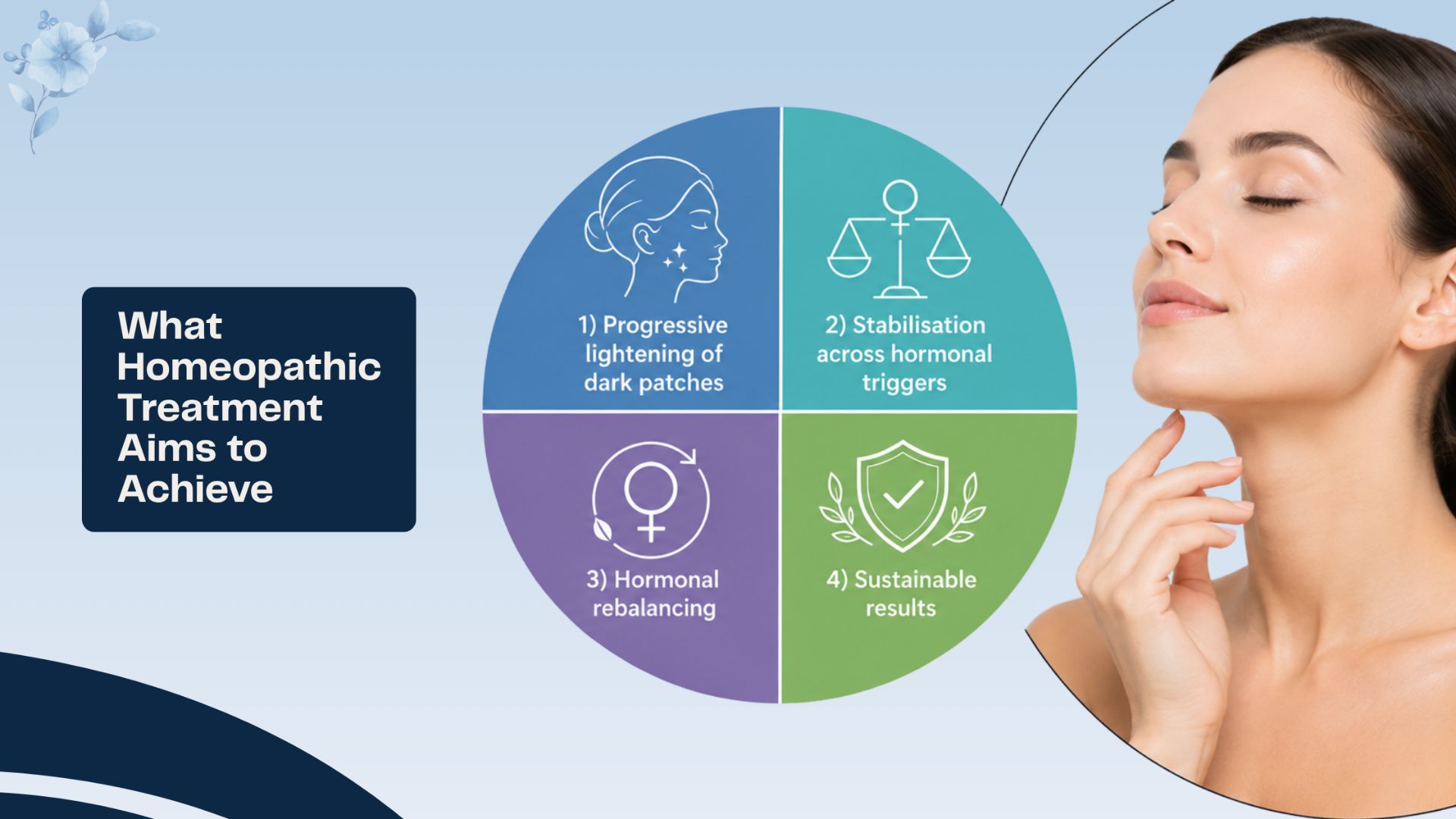
Progressive lightening of dark patches — as the hormonal and constitutional picture is addressed, excess melanin production reduces and existing dark patches gradually fade. This is a slow, genuine process — not the rapid but temporary lightening of a hydroquinone cream.
Stabilisation across hormonal triggers — melasma that worsens reliably with sun exposure, stress, or hormonal fluctuation gradually becomes less reactive as the constitutional treatment reduces the melanocyte's sensitivity to these triggers.
Hormonal rebalancing — addressing the underlying oestrogen-progesterone imbalance, thyroid dysfunction, or stress-cortisol pattern that is driving melanocyte hyperactivity. The skin improvement is a reflection of the internal hormonal improvement.
Sustainable results — because homeopathic treatment addresses the internal driver rather than bleaching the surface, improvements tend to be more stable and more durable than those achieved with topical treatments alone.
Constitutional Remedy Pictures in Melasma
For educational understanding only — appropriate remedy selection requires individual assessment by a qualified homeopathic doctor.
Women with melasma connected to grief, emotional suppression, or hormonal disruption after pregnancy or significant loss — with patches appearing predominantly on the cheeks and a general pattern of internalised emotional experience — often present a constitutional picture pointing toward specific deeply acting remedies addressing the liver-hormone-skin axis.
Women whose melasma is strongly connected to sun exposure, with a warm, expressive constitution, high sensitivity to light and heat, and patches predominantly on the forehead and nose present a different constitutional picture requiring entirely different remedies.
Women with melasma associated with thyroid dysfunction, weight changes, and a cold, fatigued constitutional picture require yet another approach — one that addresses the metabolic and thyroid dimension of the hormonal disruption alongside the skin expression.
This individualised depth is what makes homeopathic medicine for melasma on the face meaningfully different from prescribing a cream.
Daily Habits That Support Melasma Treatment
Sun protection is non-negotiable — but it is not sufficient alone. Broad-spectrum SPF 50+ applied daily, regardless of cloud cover or time of year, is essential alongside homeopathic treatment. UV radiation remains the most powerful external trigger for melanocyte activation — protecting against it reduces the stimulus while constitutional treatment addresses the internal response.
Review hormonal contraceptive use. For women whose melasma began or significantly worsened after starting oral contraceptives, discussing alternative contraceptive options with a gynaecologist is worth exploring. Oestrogen-containing contraceptives are among the most consistent melasma triggers.
Manage stress consistently. The cortisol-MSH pathway means that chronic stress directly worsens melasma. Daily stress management — breathwork, adequate sleep, regular movement — is a direct skin intervention, not just a general wellness suggestion.
Support liver health. The liver processes and clears circulating oestrogen. A sluggish liver — from poor diet, alcohol, or chronic stress — allows oestrogen to accumulate, worsening the hormonal driver of melanocyte hyperactivity. A diet rich in bitter greens, cruciferous vegetables, and adequate hydration directly supports oestrogen clearance.
Avoid heat triggers. Heat — from sun, cooking, saunas, and hot environments — activates melanocytes independently of UV radiation. Many women notice melasma worsening simply from heat exposure without direct sun. Minimising unnecessary heat exposure to the face reduces this additional stimulus.
Conclusion
Melasma is not a cosmetic problem with a cosmetic solution. It is a hormonal and constitutional condition that happens to express itself on the most visible part of your body — and treating it with creams while leaving the hormonal environment untouched is why so many women find themselves in the same cycle year after year. Homeopathic medicine for melasma offers a genuinely different approach — one that addresses the excess melanin signal at its source, works with the hormonal picture rather than against its surface consequence, and produces the kind of progressive, stable improvement that topical treatments promise but rarely deliver on their own.
At Methodex, our homeopathic doctors specialise in the constitutional assessment and treatment of melasma — taking the complete hormonal, constitutional, and skin picture before prescribing, because lasting results come from treating what is driving the pigmentation, not just what the pigmentation looks like.
Book your consultation with a Methodex homeopathic doctor today — and begin the treatment that finally starts at the right level.